
-
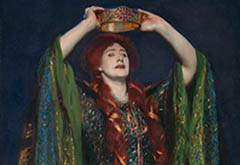
In her spectacular exhibition, Erica Hirshler, Croll Senior Curator of American Painting at the Museum of Fine Arts, Boston (MFA), has chosen to show Sargent’s work by juxtaposing selected portraits with clothing similar to, and in some cases actually depicted in, those paintings.
-
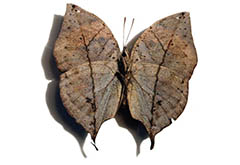
The relations between human and animal camouflage have rarely been investigated. Current scholarship, focusing on the evolutionary and military aspects of camouflage, has overshadowed earlier thinking.
-
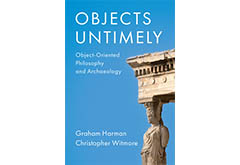
Time has long been a central concern of both archaeology and philosophy. For Plato, time was an absolute external reality. Aristotle, instead, emphasized the relative temporal relations between events.
-
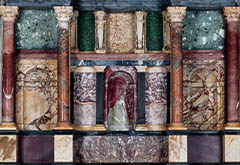
Stone, and especially marble—in the broad, ancient, and traditional sense of a veined stone lending itself to be carved and polished—is a topical subject in the history of art and architecture.
Notes from the Field
-
Book ReviewObjects Untimely: Object-Oriented Philosophy and Archaeology
Time has long been a central concern of both archaeology and philosophy. For Plato, time was an absolute external reality. Aristotle, instead, emphasized the relative temporal relations between events.
-
Book ReviewThe Art of Cloth in Mughal India
The Art of Cloth in Mughal India begins with an intriguing seventeenth-century hand-painted, mordant, and resist-dyed cotton wall hanging depicting traders, hunters, aristocrats, and monarchs from diverse parts of an early modern world intimately linked by Indian Ocean trade.
-
Book ReviewArts of Allusion: Object, Ornament, & Architecture in Medieval Islam
This book can be described as an extended essay on perception and mentality in the medieval Islamic world in relationship to objects.
-
Book ReviewThe Invention of the Colonial Americas: Data, Architecture, and the Archives of the Indies, 1781–1844.
When did colonial America begin? This is the polemical question Byron Ellsworth Hamann sets out to answer in his immensely erudite and lavishly illustrated The Invention of the Colonial Americas: Data, Architecture, and the Archives of the Indies, 1781–1844.
-
Book ReviewPainting in Stone: Architecture and the Poetics of Marble from Antiquity to the Enlightenment
Stone, and especially marble—in the broad, ancient, and traditional sense of a veined stone lending itself to be carved and polished—is a topical subject in the history of art and architecture.